Brent is at $100. Nigeria budgeted $64.85. Why the barrels matter more than the price
Oil settled above $100 on Wednesday as Hormuz traffic fell to a two-month low. Nigeria's 2026 budget assumed $64.85 and 1.84 million barrels a day. The price is beating the plan by a third; production is missing it by a tenth. Here is the arithmetic, every number sourced.
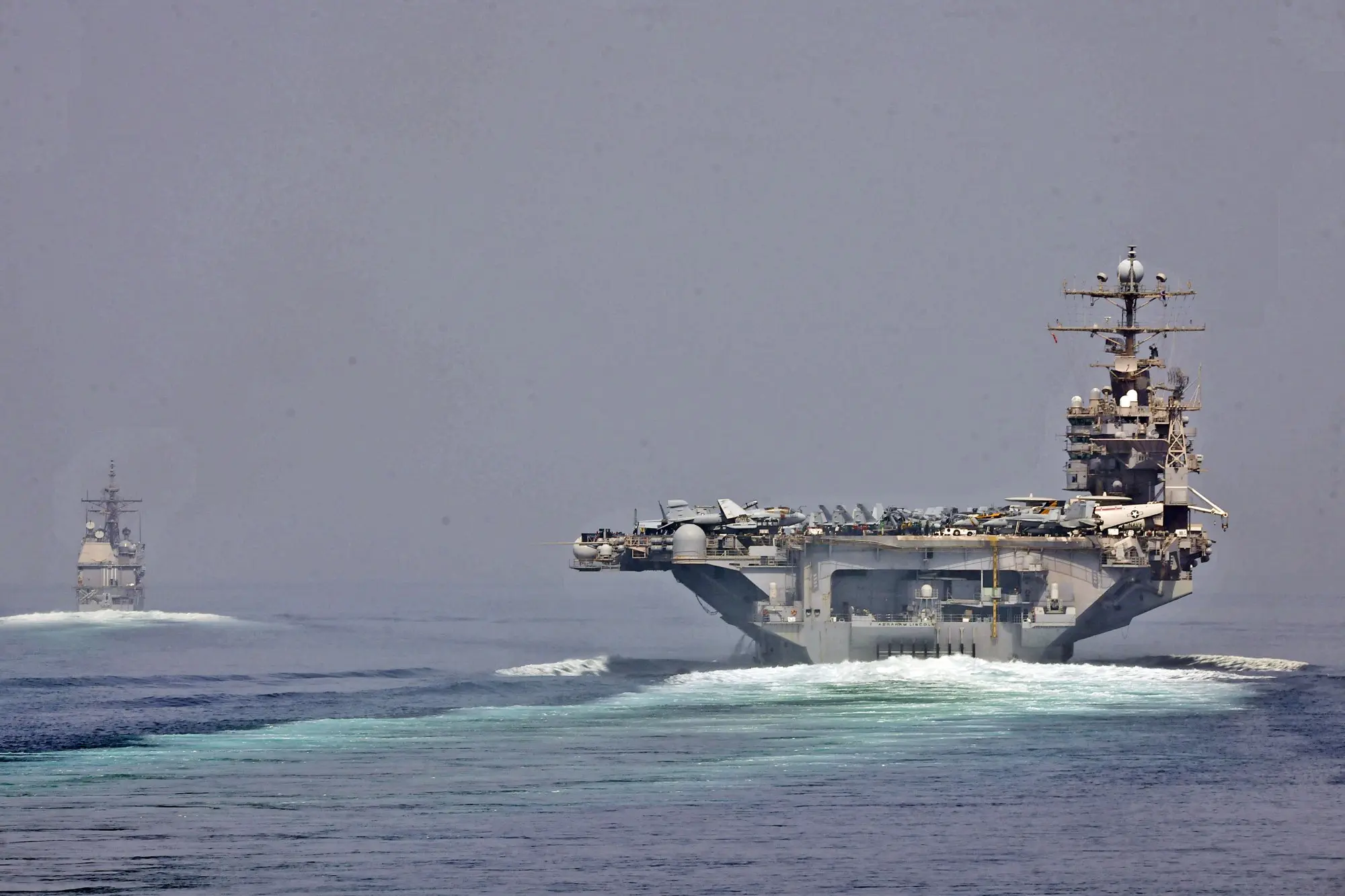
Brent crude settled at $100.20 a barrel on Wednesday, Reuters reported. The International Energy Agency agreed the same day to speed up releases from member stockpiles, which it said could bring about 100 million barrels to market; analysts and some governments told Reuters that figure did not necessarily amount to a fresh intervention of that size.
The reason the price is where it is sits in the Strait of Hormuz. Seven commodity vessels passed through the strait on Tuesday, the fewest since 23 July, according to Kpler data cited by Reuters. Crude crossing the strait fell 27 per cent from its wartime high the week before, to at least 10.1 million barrels a day, which Kpler’s analysts put at 74 per cent of the pre-war level. The week of 28 September to 5 October saw at least 12 attacks on oil, LNG and LPG tankers around the strait, three maritime security sources told Reuters, the most in any week since the US war with Iran began on 28 February. Before the war, about 125 large commercial vessels transited the strait each day, carrying a fifth of global supplies of crude oil and liquefied natural gas.
What Nigeria assumed
President Bola Tinubu signed the N68.32 trillion 2026 Appropriation Act with two fiscal assumptions that matter here, THISDAY reported: an oil benchmark of $64.85 a barrel, and production of 1.84 million barrels a day.
Against the first assumption, the market is being generous. Wednesday’s Brent settlement is $35.35 a barrel above the benchmark, or 55 per cent more than the budget planned for.
Against the second, Nigeria is still short. In the first half of the year total liquids production, crude plus condensate, averaged 1.626 million barrels a day, THISDAY calculated from Nigerian Upstream Petroleum Regulatory Commission data. That is 213,815 barrels a day, or 11.6 per cent, below the budget target, a cumulative deficit of about 38.4 million barrels over six months. THISDAY valued that deficit at about $2.49 billion at the benchmark price, and noted the real notional loss was higher because Brent traded above the benchmark for most of the half.
August was better but not there. Nigeria produced 1,677,777 barrels of crude and condensate a day, up 0.4 per cent on July, the NUPRC said in a statement reported by Channels Television. In strict crude terms, excluding condensate, output was 1,500,190 barrels a day, and the country met its OPEC quota for the fourth consecutive month. The regulator credited the modest rise to the resolution of single buoy mooring problems at the Erha field.
The arithmetic
Two numbers, both from the sources above, and one subtraction each.
- The price gap. $100.20 minus $64.85 is $35.35 a barrel above plan. At August’s 1,677,777 barrels a day, that is roughly $59 million a day of gross value above what the budget assumed. Gross, not federal revenue: cost recovery, joint-venture partner shares, production-sharing terms and taxes all sit between that number and the Federation Account.
- The volume gap. 1.84 million minus 1,677,777 is about 162,000 barrels a day that the budget counted on and August did not deliver. At $100, that is about $16 million a day of budgeted barrels that do not exist.
The first gap is a gift from a war in another region’s waterway. It lasts exactly as long as the Houthis, the Revolutionary Guards and the IEA’s stock releases allow. The second gap is Nigeria’s own, and it has been narrowing: THISDAY’s series shows output climbing from a February low of 1.484 million barrels a day to 1.735 million in June, before August’s 1.678 million. A windfall price on missing barrels is still zero.
What to watch
- The NUPRC’s September production figure, due around the middle of October on the regulator’s usual cadence.
- Whether the IEA release and the Gulf of Oman and Red Sea export routes, which Kpler says rose to 6.7 million barrels a day, pull Brent back toward the budget line.
- Any move by the National Assembly to revisit the $64.85 benchmark in a supplementary budget. None had been reported by the sources above at the time of publication.
Kairos Explains is scripted and graphics-led. Every number on screen carries its source in the receipts below.
Receipts
- Reuters — Oil prices settle down as IEA agrees to accelerate oil stock release , 2026-10-07 . Georgina McCartney, Houston; Brent settlement $100.20; IEA release of about 100 million barrels Reuters wire as syndicated by Metrobank Wealth Insights; reuters.com carries the same story.
- Reuters — Hormuz transits at lowest in over two months after attacks, data shows , 2026-10-08 . Florence Tan, Singapore; Kpler and LSEG transit counts
- Reuters — Attacks on tankers in Hormuz hit highest of any week since start of Iran war, sources say , 2026-10-07 . Jonathan Saul, London; at least 12 attacks in the week of 28 September to 5 October
- THISDAY — Despite Beating OPEC Quota, Nigeria Misses H1 Budget Oil Target by 38.4m Barrels , 2026-08-04 . Emmanuel Addeh, Abuja; analysis of NUPRC monthly data, January to June 2026
- Channels Television — Nigeria's Oil Production Climbs 0.4% In August, Meets OPEC Quota , 2026-09-13 . NUPRC statement by Eniola Akinkuotu; August 2026 production figures
More from Kairos Reports
China has nominated Song Li to run the WHO. Here is how the job is actually decided
Beijing confirmed its candidate on Thursday. The race is decided by 34 Executive Board members in January and a secret ballot of every member state in May 2027. The incumbent is the first African to hold the post. Here is the process, the dates, and what is public.
Kairos Reports
SRC Reuters · 2026-10-08 +5
The ECOWAS Court ordered Nigeria to fix its cybercrime law. What can that Court actually make a government do?
Its judgments are binding on paper, and only 22 per cent of them have been enforced. How the regional court's orders are supposed to reach a member state, where the chain breaks, and why Nigeria's section 24 amendment took four years.
Kairos Reports
Nigeria's data law exempts journalism. It does not exempt your newsletter.
The Nigeria Data Protection Act 2023 carves out publication in the public interest. The carve-out stops at the newsroom door: mailing lists, analytics and billing are ordinary processing, and the Act reaches publishers outside Nigeria.
Kairos Reports
Spotted an error? Write to corrections. Every correction is logged, dated and never silently edited: /corrections.