The ECOWAS Court ordered Nigeria to fix its cybercrime law. What can that Court actually make a government do?
Its judgments are binding on paper, and only 22 per cent of them have been enforced. How the regional court's orders are supposed to reach a member state, where the chain breaks, and why Nigeria's section 24 amendment took four years.
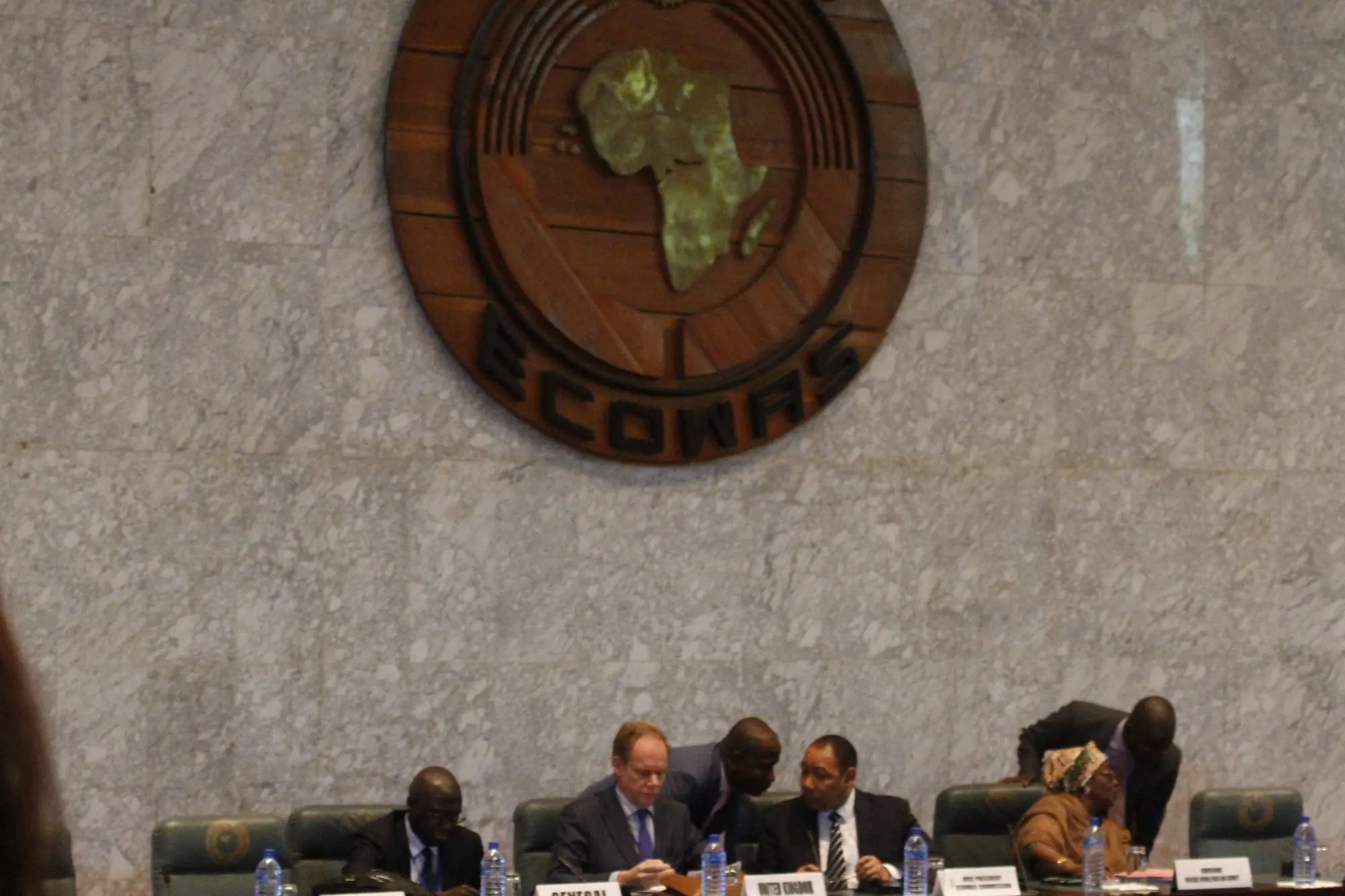
In July 2020 the ECOWAS Community Court of Justice held that section 24 of Nigeria’s Cybercrimes Act violated the African Charter and ordered Nigeria to repeal or amend it. Nigeria amended it in February 2024. Four years is a long time to obey a binding order, and it was a fast case.
Binding, by two texts
The Court’s own compliance page cites the two provisions that make its decisions binding. Article 15(4) of the Revised ECOWAS Treaty makes judgments binding on member states, community institutions, individuals and corporate entities. Article 24 of the 2005 Supplementary Protocol sets out how a judgment is to be executed.
The Court was expanded in 2005 to let individuals and entities bring cases directly, which is why a Nigerian civil-society group could sue Nigeria there without first exhausting Nigerian courts. It now operates under four mandates: a community court, a human-rights court, a public-service court and an arbitration tribunal.
How an order is supposed to reach a government
The mechanism, as the Court’s President, Justice Ricardo Cláudio Monteiro Gonçalves, described it to the first meeting of national enforcement authorities in Lagos in June 2025:
- The Court issues a judgment.
- Under Article 24(2), the judgment is enforced through a writ of execution submitted to a Competent National Authority in the member state.
- That authority verifies the writ and acts “in accordance with domestic civil procedure rules” to execute it.
- Under Article 24(4), every member state must designate such an authority and notify the Court. Ten of the twelve member states have done so.
That is the whole chain. There is no bailiff, no regional police, no fine the Court can levy on a state. Execution runs through the member state’s own ministry of justice and its own civil procedure.
Where it breaks
The Guardian reported the number the Court’s President gave at that same meeting: only 22 per cent of the Court’s judgments have been enforced by member states. He called non-enforcement a “threat to the very existence” of the Court. The Chief Registrar, Dr Yaouza Ouro-Sama, listed the persistent obstacles: legal instruments not domesticated, insufficient political commitment, and no implementing legislation.
Nigeria’s Attorney-General, Lateef Fagbemi, represented at the meeting by a director in his ministry, said harmonising enforcement protocols was “imperative”. Nigeria is one of the ten states with a designated authority.
What the section 24 case shows
Read the Nigerian timeline against that mechanism. The ECOWAS judgment landed on 10 July 2020. Nothing in the chain above forced the National Assembly to act; the amendment that finally gave effect to the order was signed on 28 February 2024, after the applicants’ lawyers wrote to the Attorney-General and filed further suits. The Court’s order was a lever. The hand on the lever was domestic.
So: an ECOWAS judgment can declare a Nigerian law incompatible with the Charter. It can order repeal. It cannot repeal. It cannot stop a prosecution in a Nigerian court while the state decides whether to comply. For a journalist facing a section 24 petition, the regional judgment is an argument to make before a Nigerian judge, not a shield that stops the petition being filed.
The caveat on the numbers
The 22 per cent figure is the Court’s own, reported by The Guardian from the President’s address. The Court’s compliance page does not publish a running enforcement table. “Twelve member states” is the Court’s own count on its compliance page; the page says ten of twelve have designated authorities but does not name the two that have not.
Receipts
- ECOWAS Community Court of Justice — Compliance with the Court's decisions , 2025-06 . Report of the inaugural meeting of Competent National Authorities, Lagos, 23–24 June 2025: Articles 15(4), 24(2), 24(4)
- The Guardian (Nigeria) — Concerns over 22% enforcement of ECOWAS Court judgments , 2025-06-24 . Justice Gonçalves' opening address; 10 of 12 member states have appointed national authorities
- Kairos Reports, The Files — Section 24, before and after , 2026-10-06 . ECOWAS judgment of 10 July 2020, ECW/CCJ/JUD/16/20; amendment signed 28 February 2024
More from Kairos Reports
China has nominated Song Li to run the WHO. Here is how the job is actually decided
Beijing confirmed its candidate on Thursday. The race is decided by 34 Executive Board members in January and a secret ballot of every member state in May 2027. The incumbent is the first African to hold the post. Here is the process, the dates, and what is public.
Kairos Reports
SRC Reuters · 2026-10-08 +5

Brent is at $100. Nigeria budgeted $64.85. Why the barrels matter more than the price
Oil settled above $100 on Wednesday as Hormuz traffic fell to a two-month low. Nigeria's 2026 budget assumed $64.85 and 1.84 million barrels a day. The price is beating the plan by a third; production is missing it by a tenth. Here is the arithmetic, every number sourced.
Kairos Reports
SRC Reuters · 2026-10-07 +4
Nigeria's data law exempts journalism. It does not exempt your newsletter.
The Nigeria Data Protection Act 2023 carves out publication in the public interest. The carve-out stops at the newsroom door: mailing lists, analytics and billing are ordinary processing, and the Act reaches publishers outside Nigeria.
Kairos Reports
Spotted an error? Write to corrections. Every correction is logged, dated and never silently edited: /corrections.