Nigeria trusts its news more than any country surveyed. That is exactly why I am showing you the receipts.
Sixty-eight percent of Nigeria's online news audience trusts the news, the highest of 48 markets. High trust plus high sharing plus low press freedom is the perfect weather for a confident lie. Here is what I am going to do about it.
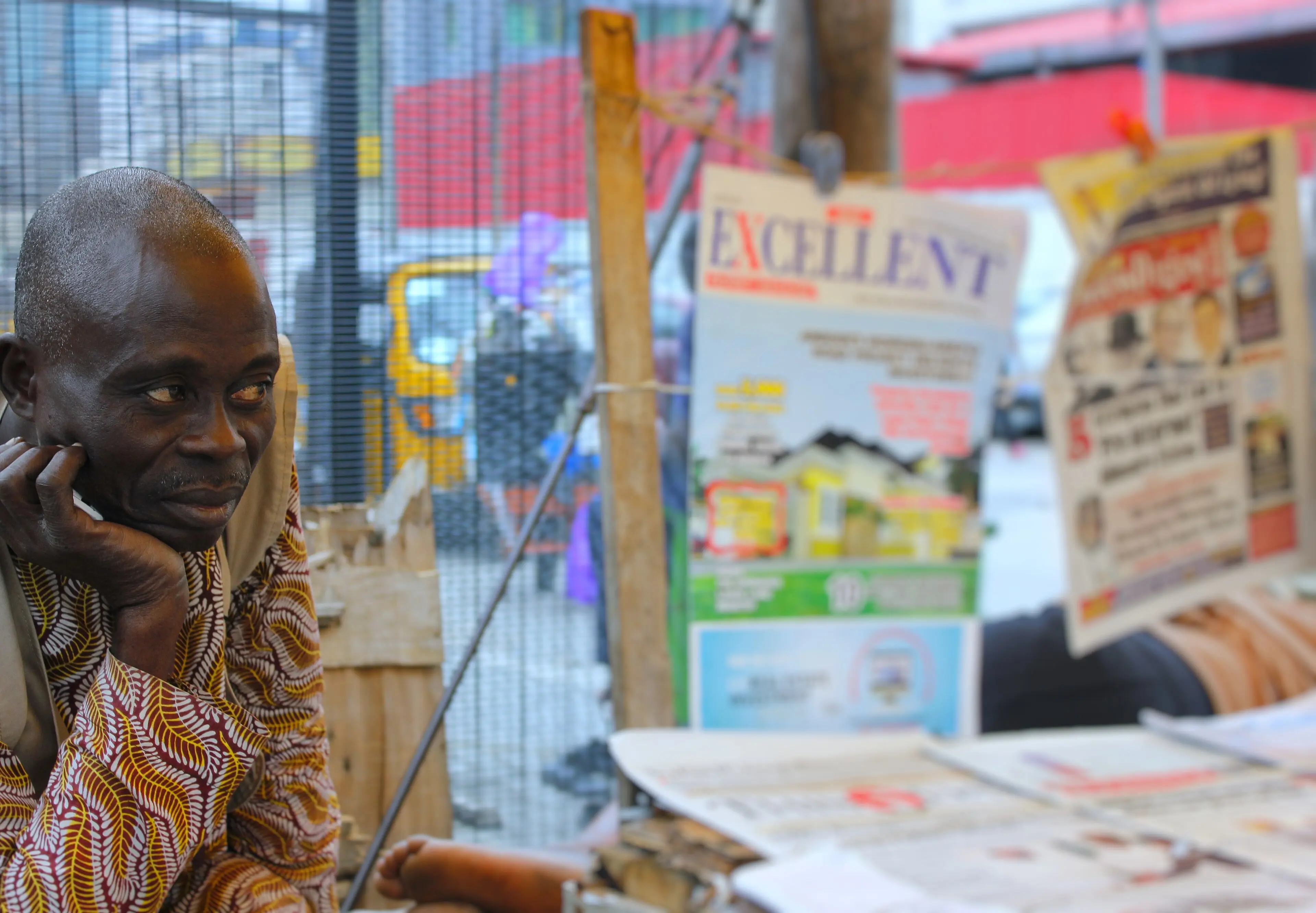
Here is the number that made me build this thing.
In the Reuters Institute’s 2025 Digital News Report, 68% of Nigeria’s online news audience said they trust the news overall. Up seven points in a year. First of 48 markets surveyed. The same page lists the brands: BBC News at 90%, Channels at 89%, The Punch at 87%. Nobody else in the world trusts their news like this.
I think that number is dangerous, and I think it is the best thing we have.
The weather report
Three more figures from the same survey, and then the argument.
Where Nigerians get news: Facebook 65%, WhatsApp 53%, YouTube 49%, X 49%. X alone jumped nine points. These are not reading platforms. They are forwarding platforms.
How much they forward: 59% of the sample said they share news by social, messaging or email. Six in ten.
How free the press that feeds them is: Nigeria sits 122nd of 180 on the Reporters Without Borders index the report quotes. During the 2024 #EndBadGovernance protests, the Committee to Protect Journalists recorded at least 56 journalists assaulted or detained, a figure the Reuters page footnotes directly.
Put the three together. A population that trusts what it reads, forwards what it trusts, and is served by reporters who can be picked up for reporting. That is the perfect weather for a confident lie. Not a clumsy one. A well-dressed one, with a logo, moving at WhatsApp speed through people who have every reason to believe it.
High trust is not a defence against misinformation. It is the fuel.
What I am not going to do
I am not going to tell you to trust me. Trust is the thing the survey says you already give away too cheaply, and I am a man with a camera and an opinion.
I am also not going to pretend the survey is more than it is. The Reuters Institute says plainly that its Nigerian sample is English-speaking, online, younger, more educated and more urban than the country, and should not be read as nationally representative. The 68% is a fact about that group. I am quoting it as that.
What I am going to do
Every factual claim I make on this show will carry its source on screen and on the page. Outlet, date, page or timestamp. Not in a description box, not “sources available on request”. Under the sentence.
That is what the lower-third on this page is. That is what the numbered list at the bottom is. It will look fussy. It is meant to. The point is that you should be able to check me in less time than it takes to forward me, and that if I am wrong, the receipt tells you exactly where.
Opinion is allowed here. Mine, in the first person, with my name on it. What is not allowed is an opinion standing on a fact nobody can find.
Nigeria trusts its news more than anyone. Fine. Let us make that trust expensive to abuse. Show the receipt.
— Tayo
Receipts
- Reuters Institute for the Study of Journalism — Digital News Report 2025: Nigeria (Tolulope Adeyemo, Code for Africa) , 2025-06-17 . Trust 68% (1/48, +7); Facebook 65%, WhatsApp 53%, YouTube 49%, X 49% for news; 59% share news; RSF index 122/180; methodology note
- Committee to Protect Journalists — In Nigeria, at least 56 journalists attacked and harassed as protests roil region , 2024-08 . As cited in the Reuters Institute's Nigeria page, footnote 3
More from Kairos Reports
Transcorp Group delivers ₦111.4 billion profit before tax in 9m 2026, expands margins…
Nigeria: Transcorp Group delivers ₦111.4 billion profit before tax in 9m 2026, expands margins and strengthens balance sheet. Africa and world: Africa Ebola Outbreak Passes 10,000 Cases, Mostly In DR Congo; Kenya: 20 Ebola contacts released from quarantine
SRC Nairametrics · 2026-10-28 +24
FG says Nigeria could declare Ebola outbreak over by December 7
Nigeria: FG says Nigeria could declare Ebola outbreak over by December 7; Nigeria evacuates Ebola patient to Switzerland; Local sourcing cuts manufacturers’ FX demand by $1bn. Africa and world: Algeria to send troops to Niger in first foreign deployment in over 50 years
SRC Nairametrics · 2026-10-26 +21
Death toll in Taraba terror attack rises to 40
Nigeria: Death toll in Taraba terror attack rises to 40; Why J.P. Morgan picked these five Nigerians to lead its merchant bank. Africa and world: Attackers kill nurse, injure health worker responding to DRC Ebola case
SRC Premium Times · 2026-10-25 +20
Spotted an error? Write to corrections. Every correction is logged, dated and never silently edited: /corrections.